
Description:
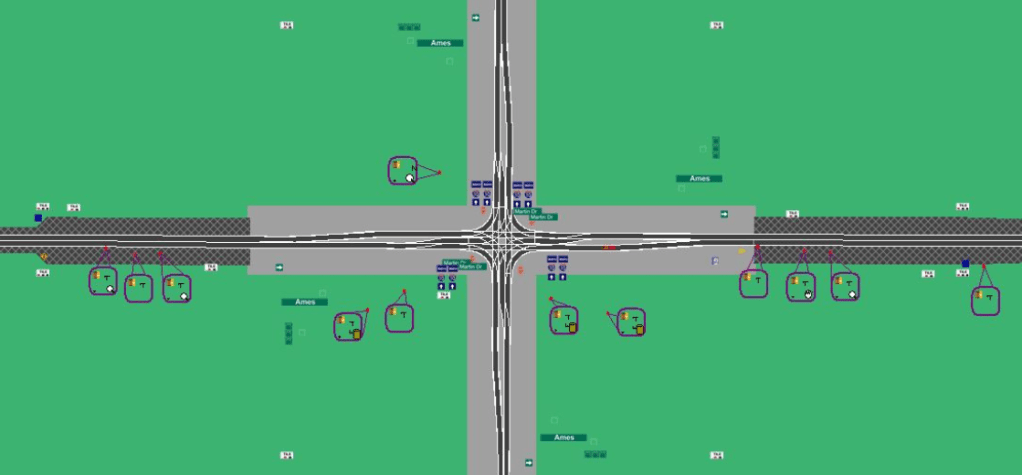
Whereas aggressive driving mainly causes speed-related crashes, aggressive driving may be reduced to improve road safety by identifying aggressive driving behaviour, aggressive drivers’ characteristics, and their underlying motivational and psychological processes. Previous studies show that both driving performance and self-reported measures of aggressive driving are effective means to identify aggressive drivers. However, these studies assessed aggressive driving patterns across only a limited number of events, did not relate driver characteristics to aggressive driving in each event, and used chiefly vehicle kinematics variables (e.g., mean speed), but not vehicle dynamics variables (e.g., brake pedal force) which better capture driver reaction and decision-making. To address these limitations, this study assessed driver characteristics, self-reported psychological measures, and driving performance measures associated with aggressive driving among 55 drivers’ behaviours in 9 driving events using a driving simulator and survey responses. The results of structural equation models showed that unique aggressive driving patterns and driver characteristics related to aggressive driving vary among different driving events. As such, we recommend road safety policies to reduce aggressive driving based on the findings in this study.
Client: University of Windsor
Project Duration: 2019 to 2022
Item Origin: M.A.Sc. Civil Engineering
Journal: Accident Analysis and Prevention, 2023, Volume 188.

Description:
Metakaolin-Limestone Impact within Limestone Calcined Clay (LC3) Cement Use in Sustainable UHPC
Ultra High-Performance Concrete (UHPC) is designed for superior mechanical strength and durability through optimized mixtures of fine and ultrafine aggregates and a very low water-to-cement ratio. However, its high Portland cement (PC) content results in a significantly larger carbon footprint compared to conventional concrete. Limestone Calcined Clay Cement (LC3) is a sustainable ternary binder that reduces cement content by more than 50%, offering a greener alternative to PC. While typical LC3 formulations contain a higher proportion of metakaolin than limestone, this study investigates an inverse proportioning approach, targeting enhanced sustainability LC3 (ESLC3), where limestone content exceeds that of metakaolin to partially replace PC in UHPC. The influence of ESLC3 at 25% and 50% replacement levels on the fresh, mechanical, and sustainability properties of UHPC was evaluated against reference mixtures made with 100% PC and 100% LC3. A cradle-to-gate life cycle assessment was conducted to quantify environmental impacts. The results revealed that up to 50% ESLC3 replacement maintained comparable compressive and flexural strengths to PC- and LC3-based UHPC while significantly reducing embodied CO₂ emissions and embodied energy as compared to PC-UHPC.
…..Client: Toronto Metropolitan University
…..Project Duration: 2022 to Ongoing
…..Item Origin: Ph.D. Civil Engineering
…..Journal: 9th International Conference on Advanced Composite
……………………..Materials in Bridges and Structures, 2025, Volume 6.
 Resilient Engineering